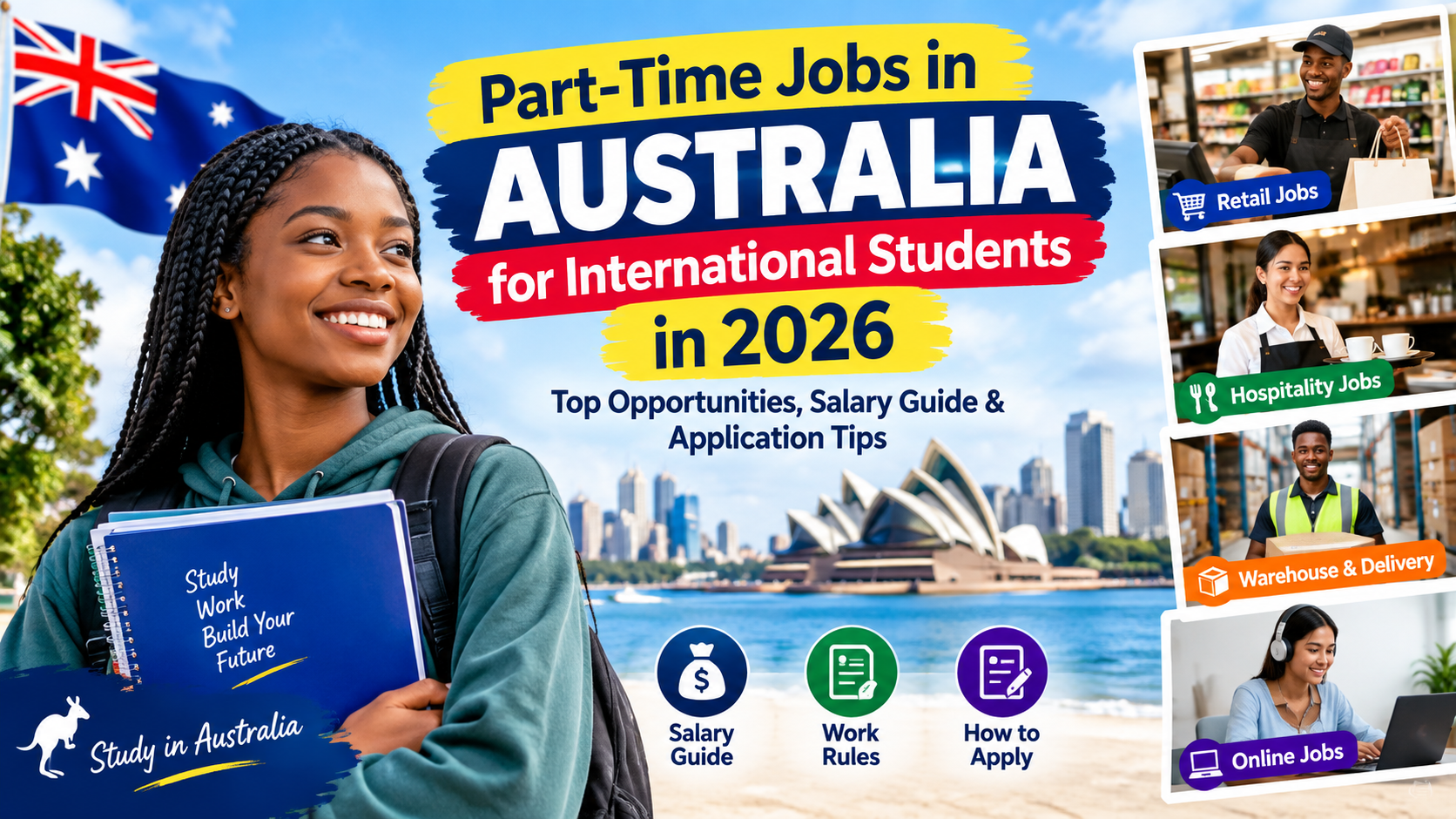
Explore the best part-time jobs in Australia for international students in 2026, including pay rates, visa work limits, and how to land a role fast.
Introduction
Rent, groceries, textbooks, and the odd flat white add up fast — so how do you make your budget stretch as an international student in Australia? For thousands of students starting semesters in 2026, the answer lies in finding the right part-time job in Australia for international students and understanding exactly what your visa allows.
Australia continues to be one of the most attractive study destinations partly because of its part-time work culture. From 1 July 2026, the National Minimum Wage climbed to $26.44 an hour, with casual workers entitled to at least $33.05 an hour once casual loading is included. That’s a real increase in what your hours are worth this year, but only if you know which jobs pay well and how many hours your Subclass 500 visa actually permits.
This guide walks through the highest-paying casual and part-time roles, realistic weekly and monthly earnings, the current fortnightly work-hour cap, and a practical, step-by-step process for landing a job before your first tuition instalment is even due.
Australian Student Visa Work Rules You Need to Know First
Before scrolling through job boards, get the visa basics locked in. Breaching your work conditions is one of the fastest ways to jeopardise your entire stay in Australia, so this section matters more than any job listing.
Here’s what applies to most Subclass 500 Student Visa holders in 2026:
- While your course is “in session” (which includes semesters, teaching periods, and exam periods): you can work up to 48 hours per fortnight
- During official scheduled course breaks: there’s no cap — you can work full-time
- Before your course starts: you cannot legally begin working, even if you’ve already arrived in the country
- Master’s by research and PhD students: exempt from the hour limit entirely once their course begins
A fortnight, in this context, is a rolling 14-day period, and the cap applies across every job combined, not per employer. Working 24 hours at a café and 25 hours at a retail store in the same fortnight still puts you over the limit, even though each employer might assume you’re well within bounds.
You may have come across claims that the cap is rising to 60 hours per fortnight. As of now, that’s a proposal only — it hasn’t been legislated, and the Department of Home Affairs continues to enforce the existing 48-hour rule. Don’t plan your semester budget around a change that hasn’t happened yet.
A quick but important reality check: the Department cross-references tax file number records with the Australian Taxation Office, so inflated hours tend to surface eventually. Keep your own simple log of hours worked each fortnight — it protects you if a question ever comes up.
With the rules clear, let’s get into where the money actually is.
Top-Paying Casual Jobs in Australia for International Students in 2026
Casual work dominates the Australian part-time job market for a good reason: it comes with a 25% casual loading on top of the base minimum wage, which genuinely boosts your take-home pay compared to permanent part-time roles.
1. Hospitality: Baristas, Waitstaff, and Bar Attendants
Cafés, restaurants, and bars remain the most common starting point for international students, largely because shifts are flexible and hiring is constant, especially near universities and CBDs. Pay under the Restaurant Industry Award typically sits at or above minimum casual rates, and weekend or evening shifts often carry penalty rates on top.
2. Retail Assistant
Retail chains recruit heavily around semester intakes and can usually build rosters around your class timetable. The General Retail Industry Award sets clear minimum rates, and Sunday shifts frequently pay significantly more per hour than weekday shifts.
3. On-Campus Roles (Library Assistant, Student Ambassador, Tutor)
On-campus jobs are consistently underrated by international students, yet they’re some of the easiest to manage around lectures. Universities already know your enrolment status and course load, so scheduling conflicts are rare, and roles like peer mentor or student ambassador often pay above the base casual rate.
4. Tutoring and Academic Support
If you’re strong in maths, coding, sciences, or a language, private and online tutoring can pay $35 to $60+ an hour — well above hospitality or retail. Demand spikes noticeably around high school exam periods (particularly VCE, HSC, and QCE seasons).
5. Delivery and Rideshare-Adjacent Work
Some delivery platforms hire riders as employees rather than independent contractors, which matters because self-employed contractor arrangements sit in a legal grey area for visa compliance and carry more risk. Always confirm your employment classification in writing before accepting a delivery role.
6. Call Centre and Customer Service
Many companies run evening and weekend shifts specifically designed around student availability, and Clerks Award rates tend to sit comfortably above the base minimum wage, particularly for after-hours shifts.
7. Aged Care and Disability Support (With Relevant Training)
For students studying health-related fields, entry-level aged care and support work can pay noticeably more than hospitality or retail once relevant certifications (such as a Certificate III) are completed, and demand across Australia remains consistently strong.
| Job Type | Typical Hourly Pay (2026, incl. casual loading) | Flexibility for Students | Visa Hour Impact |
|---|---|---|---|
| Hospitality (barista, waitstaff) | $26.44–$33.05+ | High | Counts toward 48-hr cap |
| Retail assistant | $26.44–$33.05+ | High | Counts toward 48-hr cap |
| Campus roles (library, ambassador) | $26.44–$35 | Very high | Counts toward 48-hr cap |
| Tutoring / academic support | $35–$60+ | Moderate | Counts toward 48-hr cap |
| Delivery (employed contracts only) | $26.44–$30 | High | Counts toward 48-hr cap |
| Call centre / customer service | $28–$34 | Moderate | Counts toward 48-hr cap |
| Aged care / disability support (certified) | $30–$38 | Moderate | Counts toward 48-hr cap |
Australia Minimum Wage and Salary for Student Workers in 2026
Let’s translate the headline figures into what actually lands in your bank account. From 1 July 2026, the Australia minimum wage for students in 2026 sits at $26.44 an hour for permanent employees, or $33.05 an hour once the 25% casual loading is applied — and most student jobs are casual.
Working the full 48-hour fortnight cap at the casual rate gives you approximately:
- $1,586 per fortnight (48 hours × $33.05)
- Roughly $793 a week, or around $3,170 to $3,400 a month, depending on how fortnights fall across the calendar
Keep in mind that most award-covered roles (hospitality, retail, clerks) pay according to their specific modern award rather than the bare National Minimum Wage, and award rates rose 4.75% from 1 July 2026 as well. So your actual pay slip may land somewhat higher than the bare minimum, particularly with weekend or public holiday penalty rates factored in.
A few extra financial notes worth knowing:
- You’ll need a Tax File Number (TFN) before your first pay run to avoid being taxed at the highest emergency rate.
- Superannuation contributions apply once you meet the eligibility threshold, even as a casual worker — and from 1 July 2026, employers must pay super at the same time as wages under the new Payday Super rules.
- During scheduled course breaks, with no hour cap in place, your earning potential rises considerably — many students use these windows to top up savings for the semester ahead.
Student Jobs in Melbourne, Australia: A Local Snapshot
Melbourne remains one of the most popular cities for international students, and the part-time job market reflects that. Student jobs in Melbourne, Australia are concentrated around the CBD, Carlton, and inner-north suburbs close to major universities, where café culture and retail density create constant casual hiring.
Hospitality turnover in Melbourne tends to be high, which works in your favour — new positions open up regularly, and many venues are used to accommodating international students’ class schedules and visa conditions without a second thought.
Weekend Jobs in Australia for International Students
If a packed weekday timetable makes shift work tricky, weekend jobs in Australia for international students are worth prioritising. Retail, hospitality, and events consistently see their highest demand on Saturdays and Sundays, and Sunday penalty rates often mean better pay per hour than an equivalent weekday shift.
Concentrating your working hours into the weekend also makes it far easier to track your fortnightly 48-hour cap accurately, since your hours aren’t scattered across a fragmented weekly schedule.
How to Apply: A Step-by-Step Approach
- Apply for your Tax File Number immediately after arrival — you can do this online through the Australian Taxation Office before you even have a job offer.
- Confirm your official session and break dates with your institution so you always know which hour limit applies.
- Build an Australian-style resume, typically two pages, with a short summary and clear, relevant experience.
- Check your visa work rights on VEVO (Visa Entitlement Verification Online) so you can confidently confirm your conditions to employers.
- Target university career hubs and campus job boards first, since these listings are generally pre-screened for student-friendly hours.
- Be upfront about your visa status and hour limit during interviews — most employers who hire international students regularly will simply factor this into your roster.
- Log your hours every fortnight, not monthly, to avoid an accidental breach of the 48-hour condition.
Final Thoughts
Part-time work in Australia isn’t just about surviving financially — it’s a real chance to build local work experience, meet people outside your course, and understand Australian workplace culture from the inside. With the National Minimum Wage now at $26.44 an hour (and casual rates reaching $33.05 with loading), most international students working the full 48-hour fortnight cap can realistically bring in over $3,000 a month during term time.
The essentials to remember: know your exact fortnightly hour limit, prioritise casual and award-covered roles that pay above the bare minimum, and don’t overlook tutoring or on-campus positions as higher-paying alternatives. Start applying now, track your hours carefully, and you’ll be in a much stronger position to enjoy your studies without constant financial stress.
Frequently Asked Questions
1. How many hours can international students work part-time in Australia in 2026?
Subclass 500 Student Visa holders can work up to 48 hours per fortnight while their course is in session, and unlimited hours during official scheduled course breaks.
2. What is the minimum wage for international students in Australia in 2026?
From 1 July 2026, the National Minimum Wage is $26.44 an hour. Casual employees, who make up most student jobs, are entitled to at least $33.05 an hour including the 25% casual loading.
3. Is the student visa work-hour cap increasing to 60 hours in 2026?
Not yet. A proposal to raise the cap from 48 to 60 hours per fortnight has been discussed, but it hasn’t been legislated. Students must continue following the current 48-hour rule until an official change is confirmed.
4. Which part-time jobs pay the most for international students in Australia?
Tutoring and academic support roles typically offer the highest hourly rates, often $35 to $60 or more, followed by certified aged care or disability support work and certain on-campus positions.
Have you found a part-time job that fits well around your Australian course load? Share your experience in the comments to help other international students planning their move in 2026!