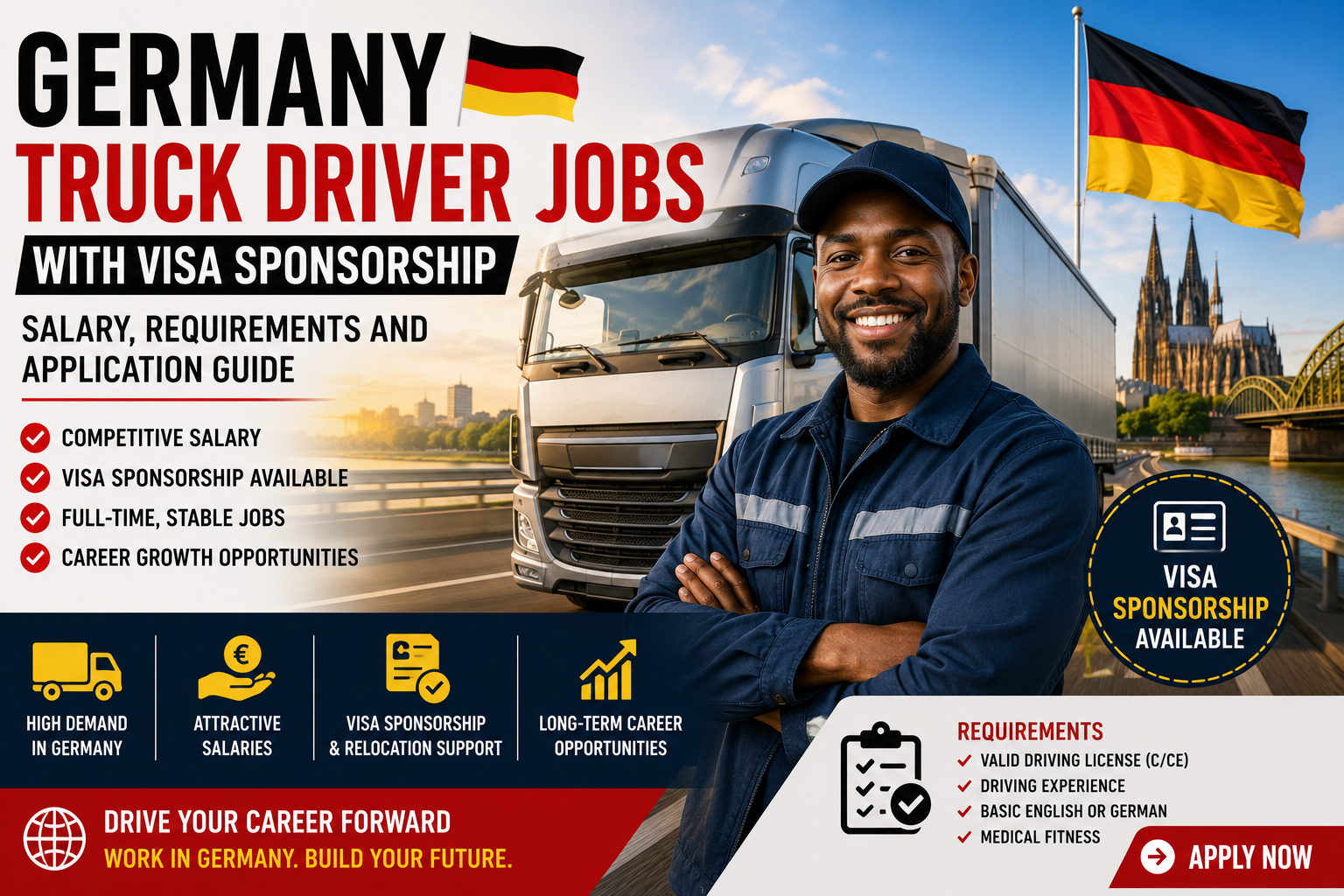
Explore Germany Truck Driver Jobs with Visa Sponsorship: real salary data, licensing requirements, and a step-by-step guide to relocating. Start your application today.
Introduction
Did you know Germany is short tens of thousands of truck drivers, with a large share of the current workforce approaching retirement age? That gap is exactly why Germany Truck Driver Jobs with Visa Sponsorship have become one of the most realistic relocation paths for skilled drivers worldwide.
Germany runs the largest logistics network in Europe. Every day, millions of tons of goods move between factories, ports, warehouses, and retail centers — and there simply aren’t enough local drivers to keep up. That shortage has pushed transport companies to actively recruit overseas, offering visa sponsorship, relocation support, and in some cases signing bonuses just to get qualified drivers behind the wheel.
If you’re wondering whether this is a genuine opportunity or just recruitment hype, this guide breaks down the real numbers: current salary ranges, licensing requirements, the visa pathway itself, and how to apply without falling for scam listings. Whether you’re researching truck driver salary in Germany, comparing visa sponsored driving jobs in Germany, or simply exploring how to relocate to Germany as a truck driver, you’ll find the practical details here.
Why Germany Needs Foreign Truck Drivers
Germany’s driver shortage isn’t a temporary blip — it’s a structural problem building for years.
- An aging workforce. A large share of Germany’s current professional drivers are approaching retirement age, and domestic recruitment hasn’t kept pace.
- Post-Brexit mobility shifts. Changes in EU labor mobility patterns have reduced the pool of drivers who previously moved freely between countries.
- E-commerce growth. Rising delivery and freight volumes have increased demand for both long-haul and regional drivers.
- Government support. Initiatives like Germany’s “Make it in Germany” program actively promote foreign driver recruitment, alongside simplified visa pathways under Section 24a of the Employment Ordinance (BeschV), which specifically targets third-country truck drivers.
Estimates of the exact shortage vary by source — some put it in the tens of thousands, others higher — but every major industry report agrees on the direction: demand for qualified drivers significantly outpaces domestic supply, and that’s expected to continue for years.
Truck Driver Salary in Germany: What to Realistically Expect
Pay varies by experience, route type, region, and employer size. Here’s a general breakdown based on current market data.
| Experience Level | Typical Monthly Gross Salary |
|---|---|
| Entry-level / regional driving | €2,300–€2,900 |
| Mid-level / long-haul driving | €2,800–€4,200 |
| Experienced / specialized (tanker, hazardous materials) | €4,000–€5,500+ |
| With signing bonus (select employers) | +€1,000–€3,000 one-time |
Keep in mind that gross salary isn’t take-home pay. Income tax and social security contributions typically reduce your gross salary by roughly 20–25%, depending on your tax class and family status. A €3,000 gross monthly salary might translate to somewhere in the €2,200–€2,400 net range after deductions — budget with net figures in mind, not the headline number.
Regional variation matters too. Drivers in wealthier states like Baden-Württemberg tend to earn noticeably more than those in regions like Saxony, so factor location into your expectations before accepting an offer.
What Employers Actually Offer
Beyond base salary, many transport companies sweeten the deal to attract international drivers:
- Free or subsidized accommodation, often worth several hundred euros monthly
- Health insurance and retirement contributions, which are mandatory for all employees in Germany
- Family reunification pathways, typically available after 12–18 months of stable employment
- Paid or subsidized training, including support toward required certifications
- Relocation assistance, ranging from flight reimbursement to onboarding support
Major logistics employers like DHL and DB Schenker are among the most active recruiters of foreign drivers, alongside numerous smaller regional firms that sometimes offer faster visa processing and quicker onboarding in exchange for slightly lower starting pay.
Requirements: What You Need Before You Apply
Licensing and Certification
- A valid commercial driving license appropriate to the vehicle class you’ll operate (typically Class C or CE for heavy trucks)
- Code 95 certification — the EU’s mandatory professional competence qualification for commercial drivers, which some employers help sponsor if you don’t already hold it
- Relevant driving experience, generally preferred though entry-level roles do exist for newer drivers with a clean record
Language and Documentation
- Basic German language skills are increasingly expected, even though many logistics companies operate with some English-language support internally. Employers vary widely here — some sponsor language training, others require proficiency before you start.
- A formal employment contract from a registered German employer, outlining job responsibilities, salary, and working conditions
- A clean driving record and background check, which most employers will request during the hiring process
The Visa Sponsorship Process: Step by Step
Foreign Worker Sponsorship in Germany generally follows this sequence, though timelines vary by case.
- Secure a job offer first. German work visas are employer-driven — you generally need a confirmed offer before applying, not the other way around.
- Employer applies through the Federal Employment Agency. For occupations facing verified shortages, like truck driving, this step is often streamlined compared to less in-demand roles.
- Apply for the Skilled Worker Visa (or the relevant driver-specific pathway under Section 24a BeschV), submitting your contract, qualifications, and license documentation.
- Arrange mandatory health insurance, which your employer may help set up as part of onboarding.
- Attend your visa appointment at the German consulate or embassy in your home country, bringing all required original documents.
- Relocate and complete final onboarding, including any Code 95 training your employer sponsors, before starting active driving duties.
Processing timelines vary considerably — some cases resolve within a few months, others take longer depending on document completeness and consulate workload. Build in generous buffer time rather than assuming a fast turnaround.
How to Avoid Scam Listings
Unfortunately, the genuine demand for foreign drivers has attracted its share of fraudulent recruiters. Protect yourself with these checks:
- Never pay upfront fees for a “guaranteed” visa or job placement — legitimate employers don’t charge candidates for sponsorship.
- Verify the company is registered and operating in Germany before submitting personal documents.
- Be skeptical of unrealistic promises, like instant approval or salaries far above market rate for your experience level.
- Cross-check job postings on multiple platforms — a listing that only exists on one obscure site deserves extra scrutiny.
Warehouse and Logistics Careers as an Alternative Path
If truck driving specifically isn’t the right fit, Germany’s broader logistics sector offers related visa-sponsored roles worth considering:
- Warehouse operations and inventory management
- Forklift operation (often requiring separate certification)
- Logistics coordination and dispatch
- Supply chain and fleet management for candidates with relevant experience
These roles frequently sit within the same companies hiring truck drivers, so applying to a logistics firm broadly — rather than a single job title — can open more doors.
Final Thoughts
Germany Truck Driver Jobs with Visa Sponsorship represent a genuinely strong opportunity for qualified drivers willing to navigate the licensing and visa process carefully. With salaries ranging from roughly €2,300 to over €5,500 monthly, structured sponsorship pathways under Section 24a BeschV, and consistent demand from major employers like DHL and DB Schenker, this isn’t a fading trend — it’s a structural labor gap that’s likely to persist for years.
Start today: confirm your license class and Code 95 status, research reputable logistics employers, and apply directly rather than through unverified third parties. The demand is real — put together a strong application and take the next step toward relocating.
Frequently Asked Questions
Q1. Do I need to speak German to get a truck driving job there?
Not always at the entry point, but expectations vary by employer. Some companies sponsor language training after hiring, while others require basic proficiency before you start. Confirm this directly with any employer before accepting an offer.
Q2. How much do truck drivers actually earn in Germany after taxes?
Gross salaries typically range from €2,300 to over €5,500 monthly depending on experience and route type, but expect income tax and social security to reduce that by roughly 20–25%, so budget using net income estimates.
Q3. Is Code 95 certification mandatory for foreign drivers?
Yes, it’s the EU’s required professional competence qualification for commercial driving. If you don’t already hold it, ask potential employers whether they sponsor or subsidize the certification as part of onboarding.
Q4. How long does the German work visa process take for truck drivers?
Timelines vary by individual case and consulate workload — some applications resolve within a few months, others take longer. Since occupations facing verified shortages, like truck driving, may see streamlined processing, it’s worth confirming current timelines with your employer directly.