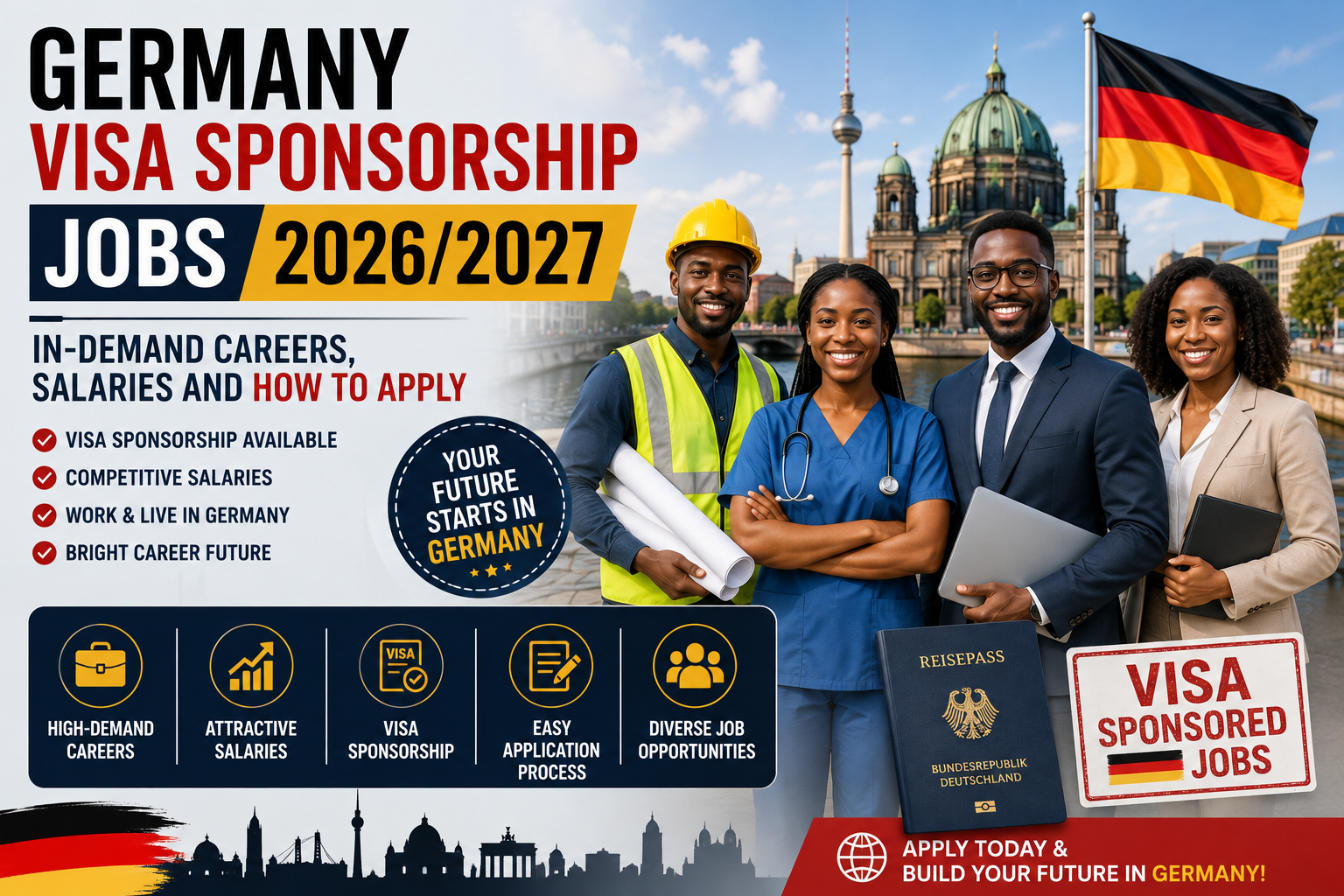
Explore Germany Visa Sponsorship Jobs 2026/2027: top in-demand careers, real salary data, and a step-by-step application guide. Start your job search today.
Introduction
Would it surprise you to learn that Germany currently lists over 160 official shortage occupations, all actively open to foreign applicants? That’s the scale of opportunity behind Germany Visa Sponsorship Jobs 2026/2027, and it’s reshaping how professionals worldwide think about relocating for work.
Germany’s population is aging, its birth rate is declining, and entire industries — healthcare, IT, engineering, skilled trades, logistics — are struggling to fill vacancies with local talent alone. In response, the government has streamlined immigration through the Skilled Immigration Act, making it genuinely easier for non-EU professionals to secure a job offer and a visa in the same process.
This isn’t limited to one industry either. Software developers, nurses, engineers, caregivers, and factory workers are all part of the current hiring wave, with salaries ranging from modest entry-level pay to well into six figures for specialists.
In this guide, we’ll cover exactly which careers are hiring, what you can expect to earn, how the visa process works, and how to apply without wasting months on the wrong pathway. If you’re researching the highest paying jobs in Germany for immigrants or simply need a Germany salary guide for foreign workers, you’re in the right place.
Why Germany Is Actively Recruiting Foreign Workers
Germany’s labor shortage isn’t hype — it’s a documented, structural issue driving real policy change.
- An aging workforce. A shrinking working-age population means fewer domestic candidates for skilled and unskilled roles alike.
- 163 official shortage occupations. Germany’s Engpassberufe (bottleneck occupations) list, maintained by the Federal Employment Agency, currently classifies 163 roles as facing critical shortages — spanning healthcare, IT, engineering, and skilled trades.
- Streamlined immigration law. The Skilled Immigration Act has made it faster for employers to hire non-EU nationals, particularly for shortage occupations.
- Multiple visa pathways. Between the EU Blue Card, Skilled Worker Visa, and Opportunity Card (Chancenkarte), candidates now have more flexible routes into the country than ever before.
That last point deserves its own explanation, since choosing the right visa pathway can make or break your application timeline.
Understanding Your Visa Options
1. EU Blue Card
Designed for higher-earning skilled professionals, the Blue Card offers a fast track toward permanent residency — often in 21 to 33 months with German language skills.
- Standard salary threshold: Set annually and adjusted for inflation
- Shortage-occupation threshold: A notably lower bar of €45,934.20 for 2026, available to roles on the official shortage list, along with Federal Employment Agency pre-approval that speeds up the process
2. Skilled Worker Visa
This route suits candidates with recognized qualifications or vocational training, even outside the shortage-occupation list. It’s typically used by tradespeople, technicians, and professionals whose degrees or certifications require formal recognition through Germany’s Anerkennung portal.
3. Opportunity Card (Chancenkarte)
Launched in 2024, the Opportunity Card lets skilled job seekers enter Germany and search for work for up to 12 months — without needing a job offer first. It’s a genuine shift from Germany’s traditionally employer-driven visa system, and it’s proven popular with candidates who want to network and interview in person before committing.
In-Demand Careers and What They Pay
1. IT and Software Development
Demand for software developers alone reportedly exceeds well over 100,000 open positions, with the sector projected to keep growing steadily through the next few years. English-language roles are common, especially in Berlin and Munich.
- Typical salary: €55,000 for juniors, rising to €85,000–€130,000 for senior specialists
2. Healthcare and Medical Professionals
Germany’s aging population has created urgent demand for doctors, nurses, and allied health workers, with government-to-government recruitment partnerships in place with countries like the Philippines, India, and Kenya to fast-track qualified nurses.
- Typical salary: Physicians average around €72,000 annually, with senior specialists and surgeons earning considerably more; nurses generally earn closer to the national average
3. Caregiver Jobs in Germany for Foreigners
Elderly and long-term care roles are among the most consistently understaffed positions in the country. Caregiver salaries tend to sit below the national average at entry level, but they typically rise with experience and German language proficiency, and many caregiver visa pathways include structured training support.
4. Engineering (Mechanical, Electrical, Civil, Automotive)
Germany remains one of Europe’s engineering capitals, and demand spans mechanical, electrical, civil, and automotive specializations.
- Typical salary: Mid-level engineers earn around the national average, with experienced specialists earning well above it
5. Factory Jobs in Germany with Visa Sponsorship
Manufacturing and production roles — from assembly line work to machine operation — remain a steady source of visa-sponsored employment, particularly through the Ausbildung (vocational training) pathway, which can fast-track workers into skilled trade roles like welding.
- Typical salary: Entry-level factory roles start below the national average but climb meaningfully with certification and experience
6. Skilled Trades (Electricians, Welders, Mechatronics Technicians)
Skilled trades represent one of Germany’s biggest labor gaps. These roles often qualify for the shortage-occupation Blue Card threshold and sometimes skip the labor market priority check entirely, speeding up approval.
Salary Snapshot by Career Path
| Career Path | Entry-Level Salary | Senior/Specialist Salary |
|---|---|---|
| Software Development | ~€55,000/year | €85,000–€130,000/year |
| Medicine (Physicians) | ~€72,000/year average | Well above €100,000/year for specialists |
| Engineering | Around national average | Well above average with experience |
| Skilled Trades | Around national average | Rises with certification |
| Caregiving | Below national average | Rises with experience and German skills |
| Factory/Manufacturing | Below national average | Improves with training and certification |
City matters too — Frankfurt, Munich, and Berlin tend to pay the most, though living costs run higher in those cities as well.
How to Apply: A Practical Step-by-Step Guide
- Identify your visa pathway first. Check whether your occupation appears on the shortage list — this affects your salary threshold, processing speed, and whether you need a job offer before applying.
- Get your qualifications recognized if needed. Regulated professions (healthcare, some trades) require formal recognition through Germany’s Anerkennung portal before you can work.
- Search verified job platforms. Sites like Arbeitnow and LinkedIn list current visa-sponsored roles, and many major employers — including SAP, Siemens, Bosch, and BMW — regularly hire international candidates.
- Tailor your CV to German standards. Concise, factual, and clearly formatted CVs tend to perform better than lengthy narrative-style resumes.
- Apply directly to employers with sponsorship programs. Larger multinational companies are more likely to have established relocation and visa support processes in place.
- Prepare your visa documentation. Have your employment contract, qualification recognition (if applicable), and proof of health insurance ready before your consulate appointment.
- Consider the Opportunity Card if you don’t have an offer yet. It lets you search for work on the ground in Germany for up to 12 months, which can be worth the flexibility if your field is competitive.
Common Mistakes to Avoid
- Ignoring the shortage-occupation list. Applying through the standard Blue Card threshold when your occupation qualifies for the lower shortage-list threshold can cost you unnecessary delays.
- Skipping qualification recognition. For regulated fields like healthcare, this step is mandatory, not optional — start it early since it can take time.
- Assuming English is always enough. It’s often sufficient in tech, but German proficiency meaningfully expands your options in healthcare, trades, and caregiving roles.
- Overlooking Germany jobs with relocation assistance. Many multinational employers actively offer relocation packages, language training, and housing support — don’t assume you’re on your own for the move.
Conclusion
Germany Visa Sponsorship Jobs 2026/2027 span far more than one industry — from six-figure tech and medical roles to steady factory and caregiving positions, there’s a genuine pathway for a wide range of skill levels and backgrounds. With 163 official shortage occupations, multiple visa routes, and streamlined immigration policy behind it, this is one of the more accessible relocation opportunities in Europe right now.
Start today: check whether your occupation sits on the shortage list, get your qualifications recognized if needed, and begin applying to employers with a track record of sponsoring international talent. The demand is real, and the pathway is clearer than ever.
Frequently Asked Questions
Q1. What’s the easiest way to qualify for Germany’s lower Blue Card salary threshold?
Your occupation needs to appear on Germany’s official shortage occupation list (Engpassberufe). If it does, you may qualify for the reduced 2026 threshold of €45,934.20 instead of the standard rate, along with faster Federal Employment Agency approval.
Q2. Can I move to Germany without a job offer first?
Yes, through the Opportunity Card (Chancenkarte). It allows qualified candidates to enter Germany and search for work for up to 12 months, which is a significant shift from the traditional employer-driven visa system.
Q3. Do caregiver and factory jobs in Germany really offer visa sponsorship?
Yes. Both sectors face persistent staffing shortages, and many employers sponsor visas for foreign workers, sometimes paired with structured training or Ausbildung (vocational training) pathways that improve pay over time.
Q4. How long does it take to get permanent residency through the EU Blue Card?
With German language skills, Blue Card holders can typically reach permanent residency in 21 to 33 months, considerably faster than most standard immigration pathways.