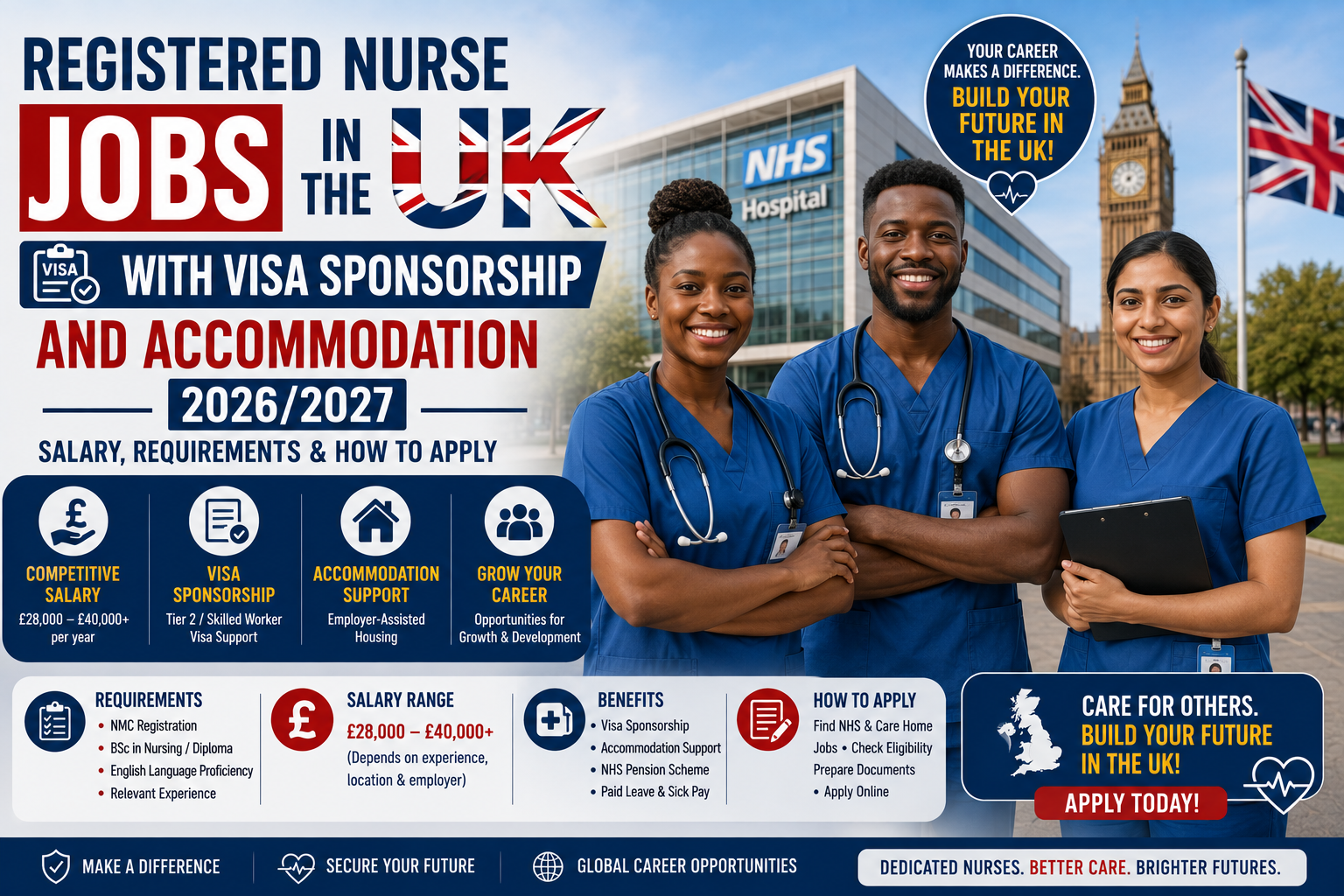
Explore Registered Nurse Jobs in the UK with Visa Sponsorship and Accommodation for 2026/2027: salary bands, NMC requirements, and how to apply.
Introduction
What if the biggest barrier standing between you and a UK nursing career isn’t your qualifications, but simply not knowing which employers actually sponsor and house international nurses? Nursing sits firmly on the UK government’s shortage occupation list, and that single fact is reshaping how thousands of foreign-trained nurses approach Registered Nurse Jobs in the UK with Visa Sponsorship and Accommodation.
The UK’s National Health Service, alongside private hospitals and care providers, faces persistent nursing shortages across nearly every specialty. That shortage status isn’t just a talking point — it translates directly into reduced visa fees, exemption from the Immigration Health Surcharge, and lower salary thresholds specifically for nursing roles compared to most other sponsored occupations.
Better still, many NHS Trusts and private healthcare employers now bundle relocation support directly into their offers, covering everything from temporary accommodation to NMC registration costs. That combination — genuine shortage-driven demand plus real relocation support — is why this remains one of the more accessible healthcare migration routes in the world right now.
This guide breaks down exactly what you’ll earn, what NMC registration actually requires, how the Health and Care Worker visa works, and how to apply without wasting months on the wrong employers. If you’re researching UK nursing jobs for foreigners or trying to identify UK hospitals hiring registered nurses with accommodation and sponsorship, here’s your practical starting point.
Why UK Nursing Remains Wide Open to International Applicants
A few structural realities explain why this pathway stays consistently accessible, even as other UK visa categories tighten.
- Nursing is an official shortage occupation. This status unlocks the Health and Care Worker visa, a subset of the Skilled Worker visa built specifically for healthcare professionals.
- Lower salary thresholds apply. Rather than meeting the general Skilled Worker salary floor, nurses qualify through occupation-specific “going rate” thresholds that sit meaningfully lower.
- Reduced visa costs. Health and Care Worker visa applicants benefit from discounted application fees and full exemption from the Immigration Health Surcharge — a saving that can exceed £3,000–£5,000 depending on visa length.
- Every NHS Trust holds a sponsor licence. Unlike many private-sector employers who must apply for sponsor status individually, NHS bodies automatically qualify as licensed sponsors, which simplifies your employer search considerably.
That’s a strong foundation. Now let’s get into what you’ll actually earn.
Registered Nurse Salaries in the UK: What to Expect
NHS pay follows the Agenda for Change (AfC) banding structure, while private-sector and care-home salaries vary more by employer and region.
| NHS Band | Typical Role | Approximate Starting Salary |
|---|---|---|
| Band 5 | Newly qualified registered nurse | ~£29,970/year |
| Band 6 | Experienced nurse, specialist roles | ~£36,000/year |
| Band 7 | Senior nurse, ward management | ~£46,000/year+ |
| Private/care sector | Registered nurse (varies by employer) | Often hourly, roughly £22/hour in some listings |
A note on salary thresholds: Registered nurses (occupation code SOC 2231) qualify through a reduced “going rate” of roughly £29,970, which sits well below the general Skilled Worker salary threshold. Because immigration salary rules are reviewed periodically, always confirm the current figure directly on gov.uk before finalizing your relocation plans — thresholds have shifted more than once in recent cycles.
Understanding the Health and Care Worker Visa
The Health and Care Worker visa is a dedicated route within the Skilled Worker visa framework, built specifically for eligible healthcare professionals.
- Who qualifies: Registered nurses, midwives, nursing associates, doctors, and a defined list of allied health and senior care roles
- Reduced fees: Application costs run lower than the standard Skilled Worker visa
- Immigration Health Surcharge exemption: Health and Care visa holders don’t pay the IHS at all — a substantial saving compared to other work visa categories
- Sponsor requirements: Your employer must hold a valid Home Office sponsor licence and, for care providers specifically, CQC registration (or the equivalent regulator in Scotland, Wales, or Northern Ireland)
- Visa duration: Typically granted for up to 5 years before renewal is required, giving you meaningful stability to settle in
Once you accept a job offer, your employer issues a Certificate of Sponsorship (CoS) — a digital reference number, not a physical document — which you’ll need to formally apply for your visa.
NMC Registration: Your Essential First Step
Before you can practice as a registered nurse in the UK, you must register with the Nursing and Midwifery Council (NMC). This process runs in parallel with your job search, and starting it early matters enormously.
- Qualification verification. The NMC reviews your nursing qualification and clinical experience against UK standards.
- Computer-Based Test (CBT). This assessment can typically be taken in your home country before relocating.
- English language proficiency. Most applicants need IELTS Academic with a 7.0 or higher in each component, or an equivalent OET score, unless you qualify for an exemption.
- Objective Structured Clinical Examination (OSCE). This practical, in-person exam is usually completed in the UK and confirms your clinical competency against NMC standards.
- Identity and health documentation. Final registration requires submitting proof of identity and meeting health requirements.
Many NHS Trusts and larger private employers actively support this process, sometimes covering CBT and OSCE costs, or arranging your OSCE appointment as part of your relocation package — always ask directly what support is included before accepting an offer.
UK Hospitals Hiring Registered Nurses with Accommodation and Sponsorship
Relocation support varies significantly by employer, so it’s worth understanding what “accommodation and sponsorship” packages typically include.
- Temporary accommodation on arrival. Many Trusts arrange short-term housing for your first weeks, giving you time to find permanent accommodation without financial pressure.
- Visa and registration fee coverage. Some employers cover or reimburse visa application fees, NMC registration costs, and OSCE exam fees as part of a relocation package — particularly in shortage specialties.
- Flight reimbursement. Certain Trusts and private hospital groups include travel costs in their offer, though this isn’t universal.
- Preceptorship programmes. Many Trusts run structured induction periods specifically for newly qualified or internationally trained nurses, easing the transition into UK clinical practice.
Because the extent of this support varies considerably by Trust and even by specific vacancy, always read the full job advertisement carefully or ask directly during your interview about what relocation and accommodation support is actually included — don’t assume it’s standard everywhere.
How to Find Genuine Sponsorship Opportunities
1. NHS Jobs and Trac.jobs
These are the primary official platforms for NHS vacancies, and many adverts explicitly confirm sponsorship eligibility, saving you time compared to generic job boards.
2. The Register of Licensed Sponsors
Before applying anywhere, you can verify whether a specific employer holds a valid Home Office sponsor licence through the official register on gov.uk. Skipping this check is one of the most common — and most costly — mistakes international applicants make.
3. Specialized Recruitment Agencies
Reputable healthcare recruitment agencies can guide you through NMC registration and connect you with verified sponsoring employers, though it’s essential to confirm any agency’s legitimacy before sharing personal documents or paying any fees.
4. Private Hospitals and Care Providers
Beyond the NHS, private hospital groups and CQC-registered care providers also sponsor nurses, sometimes with faster processing timelines, though salary structures and benefits differ from NHS Agenda for Change bands.
Comparing UK Nursing Sponsorship Pathways
| Pathway | Typical Employer | Salary Structure | Sponsorship Speed |
|---|---|---|---|
| NHS Trust | Public hospitals | Agenda for Change bands | Standard, well-established process |
| Private Hospital | Private healthcare groups | Employer-set, often competitive | Varies by group |
| Care Home/Nursing Home | CQC-registered providers | Often hourly, varies widely | Can be faster for urgent roles |
| Recruitment Agency-Placed | Various | Depends on placement | Varies, verify agency legitimacy first |
How to Apply: Step-by-Step
- Start your NMC registration process early. This can take several months, so begin qualification verification and CBT preparation well before you expect to relocate.
- Confirm your English language score meets requirements. Book IELTS or OET early if you haven’t already met the threshold.
- Search verified job platforms. Use NHS Jobs, Trac.jobs, or reputable agency listings, filtering specifically for visa sponsorship confirmation.
- Verify the employer’s sponsor licence on the official gov.uk register before investing time in an application.
- Apply and prepare for interviews. Be ready to discuss your clinical experience, NMC registration status, and realistic availability to start.
- Receive your Certificate of Sponsorship. Once offered a role, your employer issues this digital reference for your visa application.
- Apply for your Health and Care Worker visa, then prepare for OSCE scheduling and relocation logistics, ideally with your employer’s support.
Common Mistakes to Avoid
- Skipping the sponsor licence check. Applying to an employer without a valid sponsor licence wastes time and can’t lead to a visa, regardless of how strong your qualifications are.
- Underestimating NMC registration timelines. Between the CBT, OSCE scheduling, and document verification, this process often takes several months — start early.
- Assuming accommodation support is universal. Relocation packages vary significantly by employer; always confirm specifics rather than assuming.
- Paying unverified agencies upfront fees. Legitimate recruitment support shouldn’t require large upfront payments — verify any agency’s track record before sharing documents or money.
Conclusion
Registered Nurse Jobs in the UK with Visa Sponsorship and Accommodation remain one of the more genuinely accessible healthcare migration pathways available today, thanks to nursing’s shortage occupation status, reduced visa costs, and the relocation support many employers now build directly into their offers. With NHS Trusts and private providers actively recruiting internationally, the opportunity is real for nurses willing to navigate NMC registration carefully and verify employers before applying.
Start today: confirm your NMC registration pathway, check current salary thresholds on gov.uk, and begin searching verified job platforms for sponsorship-confirmed roles. The UK’s nursing workforce needs qualified professionals — position yourself to be one of them.
Frequently Asked Questions
Q1. How much do registered nurses earn in the UK under visa sponsorship?
NHS Band 5 newly qualified nurses typically start around £29,970 annually, rising to roughly £36,000 at Band 6 and £46,000 or more at Band 7. Private-sector and care-home pay varies more by employer and region.
Q2. Do I need to pass the OSCE before or after moving to the UK?
The Computer-Based Test (CBT) can usually be completed in your home country, but the Objective Structured Clinical Examination (OSCE) is typically completed in person in the UK as the final step of NMC registration.
Q3. Does the Health and Care Worker visa really exempt me from extra NHS surcharges?
Yes. Health and Care Worker visa holders are fully exempt from the Immigration Health Surcharge, which can save several thousand pounds compared to standard Skilled Worker visa applicants.
Q4. How can I confirm a UK employer is legitimately able to sponsor my nursing visa?
Check the official Register of Licensed Sponsors on gov.uk before applying. Only employers listed there can legally issue a Certificate of Sponsorship for your Health and Care Worker visa application.